
After Hauntology
Brat and the Age of Affirmation

"You can barely even talk about the future. The future seems to be happening right now if you just like, blink"
- A. G. Cook
Brat
On June 7 2024, Charli XCX dropped Brat, her sixth studio album. While her previous work oscillated between innovation (Vroom Vroom, 2016) and selling out (Crash, 2022), Brat creates a perfect synthesis of mass appeal and formal sophistication. Bracketed by 360 and 365, high-energy party anthems, most of the album sounds upbeat and catchy. With its brazen use of beat breaks and superbly executed sound design, Charly XCX has raised the bar. This is what club music can be: unapologetic, well-executed, energizing.
After a few weeks, the internet exploded. Celebrated by normies and art school snobs alike, Brat is everywhere. This is without doubt a cultural phenomenon, and its significance can be felt intuitively. We understand that something bigger reveals itself here, some fact about the world itself. Something about the vibes, which have somehow shifted.
What is Brat?

Death of the Hauntological Left
During the 2010s, the Hipster ruled supreme. Traumatized by the decline of subculture, which in its ignoble death had finally revealed the hollowness at its core, Hipsters were determined to cultivate distance. They eshewed the mainstream, consuming music “you have probably never heard of” and reviving long forgotten fashion trends. The opposite of Hipsterism was actually liking things, for even when something was in fact consumed – venyl records, longboards, Bandcamp – it was all with a wink and a smile. Don’t let yourself get attached to anything you are not willing to walk out on in 30 seconds flat if you feel the heat around the corner. Yes, I listen to Belarusian pseudo post-punk, but of course ironically. There were no feelings of belonging, not even to Hipsterism itself. Not a single self-respecting Hipster would have owned the label.
The fuel of this movement was a deep-steated dissatisfaction with the present. It had a formal and a political aspect. Formally, there was an instinctual gut reaction against the mainstream, created by a conscious or unconscious understanding of its mechanisms. Watch a Hollywood movie: This is where they want to you be sad. This is where you are supposed to be afraid for the main character. This is catharsis. Let the tears flow. Thank you for buying the ticket. Once we understand the techniques of mass culture – a swelling Hans Zimmer score, the silence before the beat drop, autotune – we feel dirty. These media people objectify us. They are playing with our feelings. Just like propaganda, pop represents the intellect turning against itself, thereby expressing the dialectics of Enlightenment. Hipsterism, in its attempt to cultivate taste, was an attempt to regain a shred of dignity, to assert subjectivity.
Politically, the Hipsters belong to the same Zeitgeist which in the second half of the 2010s birthed Vaporwave, left accelerationism, and the Millennial/Zoomer Left. The common denominator uniting these phenomena was a belief in the staleness of the present. Late stage postmodernism equals the slow cancellation of the future, a time and place where nothing ever happens and where progress is impossible. No author captured this moment better than Mark Fisher, whose bestseller Capitalist Realism became something like a bible for young, politically conscious millennials. The prevailing mood was nostalgia for “lost futures”, for high modernism, for a time when the left was still ambitious, when a different world was still imaginable. Soon, the almost romanticist elitism of the Hipsters was augmented by neo-modernist desires. People were interested in brutalist architecture, Eastern Block monuments, and Russian constructivist art.
The political programme of the Millennials – and later, the Zoomers – was formulated in direct opposition to the practices and orientations of an earlier left, which was accused of defeatism, a “radical scaling down of political and cognitive ambition” (Ray Brassier), and a retreat into “a folk politics of localism, direct action, and relentless horizontalism” (Nick Srnicek / Alex Williams). In order to escape the present and break into the future, the left had to recover the critical epistemology of the Enlightenment along with its former will to power. It had to become effectual once more. This perspective engendered a positive reappraisal of both Leninist and Social Democratic strategies. Just like the thinkers of the Renaissance and Neoclassicism, educated radicals felt that the conquest of the future necessitated a retrograde movement in historical time. Therein lies the essence of the hauntological left, the Vaporwave left, a movement driven by nostalgia for an age that had allowed us to imagine – and design – the future.
The 2010s consequently saw the birth of new philosophical movements such as Speculative Realism and Neorationalism along with the emergence of new media outlets, among them Bhaskar Sunkara’s Jacobin Magazine and Alex Hochuli’s Aufhebunga Bunga podcast. A new orientation geared towards winning took hold. Without this tectonic shift in collective consciousness, neither the Bernie Sanders campaign nor Fridays for Future would have been possible.
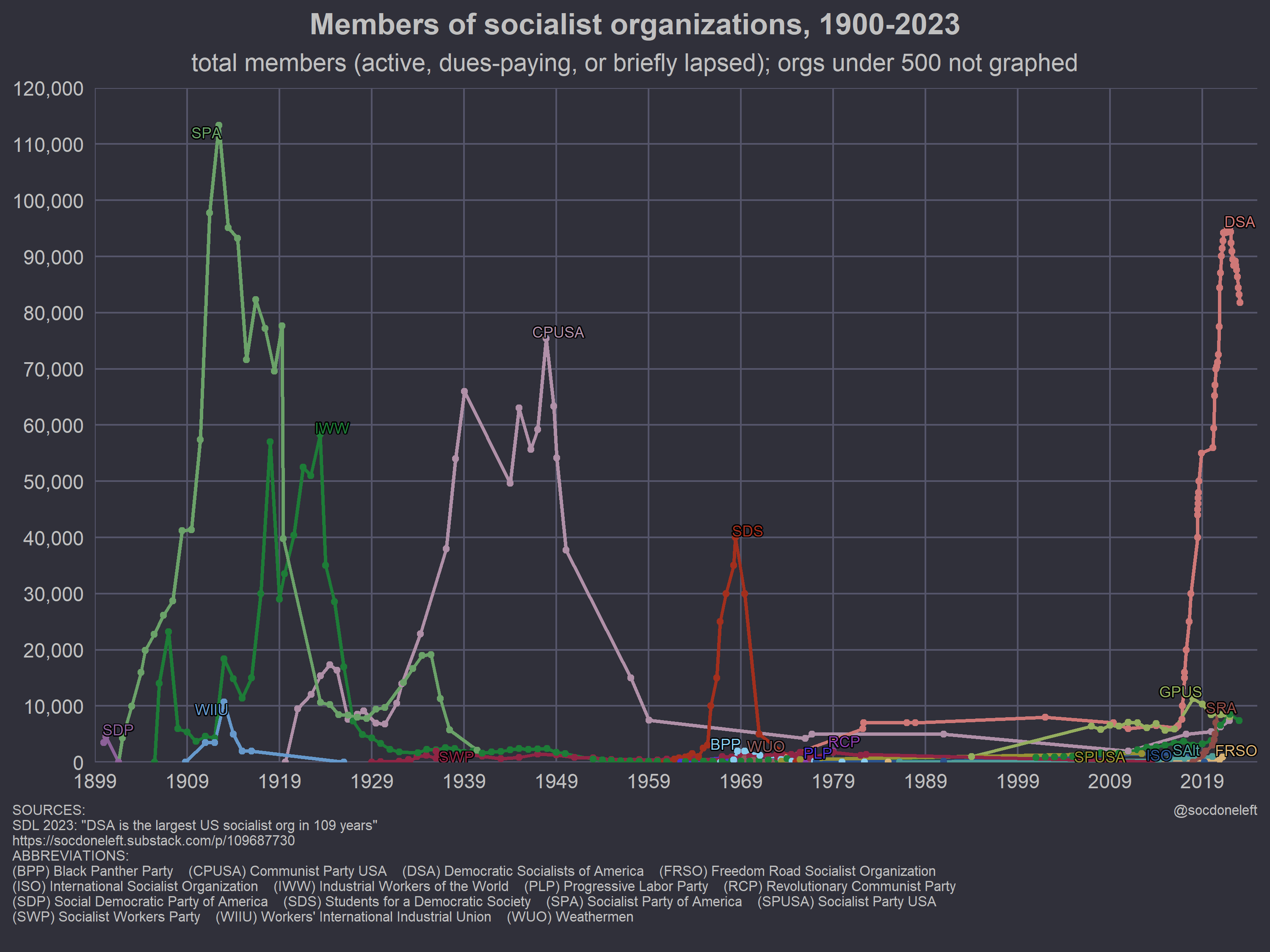
Success came quickly. The Millennial and Zoomer left soon became the strongest and most active political movement the West had seen since 1968. Its organisations, above all the Democratic Socialists of America, were quickly gaining ground. Its activists, led by labor pioneers such as Jane McAlevey, went on the offensive. The rapid growth and practical success of this new thing was undeniable.
And then, Covid struck. Five years of community building, political activism, and union organizing were just … gone. A movement is nothing but a pattern of interactions and habits which turn atomized individuals into a coherent whole. Belonging to the Millennial and Zoomer left meant attending org meetings, reading groups, and climate protests. With lockdown, all activities ceased. A movement assembles itself through the positive feedback loop generated by its actions, it is propelled by its own energy. Any stoppage leads to death, and Covid was precisely that. The ultimate stoppage.
For Millennials, the depolitization caused by Covid served as a Schelling Point for a collective retreat into what we may call adulthood. Many turned their backs on the activist lifestyle, concentrating on their careers and founding families. Zoomers, on the other hand, went to parties.
Age of Affirmation
The hauntologists were unhappy with their time because they could still imagine utopia. Their depression was in fact a product of hope. But with political movement defeated and dreams shattered, such hope is no longer feasible. Liberated from the oppressing duty to “invent the future” and save the world, young people can now finally make peace with the present.
The post-Covid age is therefore an age of affirmation. Where the Hipster had scoffed at the popular and the contemporary, we now have to celebrate them; everything else would betray a sentimental attachment to an outdated paradigm. Those who cling to critique demonstrate nothing but an inability to come to terms with today.
History can liquidate the object of desire, but not desire itself. If the future creases to be, then it is the present which must be desired. We no longer have to salvage, invent, construct. The object of desire ready is at hand, just before us. It is our time, our lives. We have no choice but say yes. Affirm.
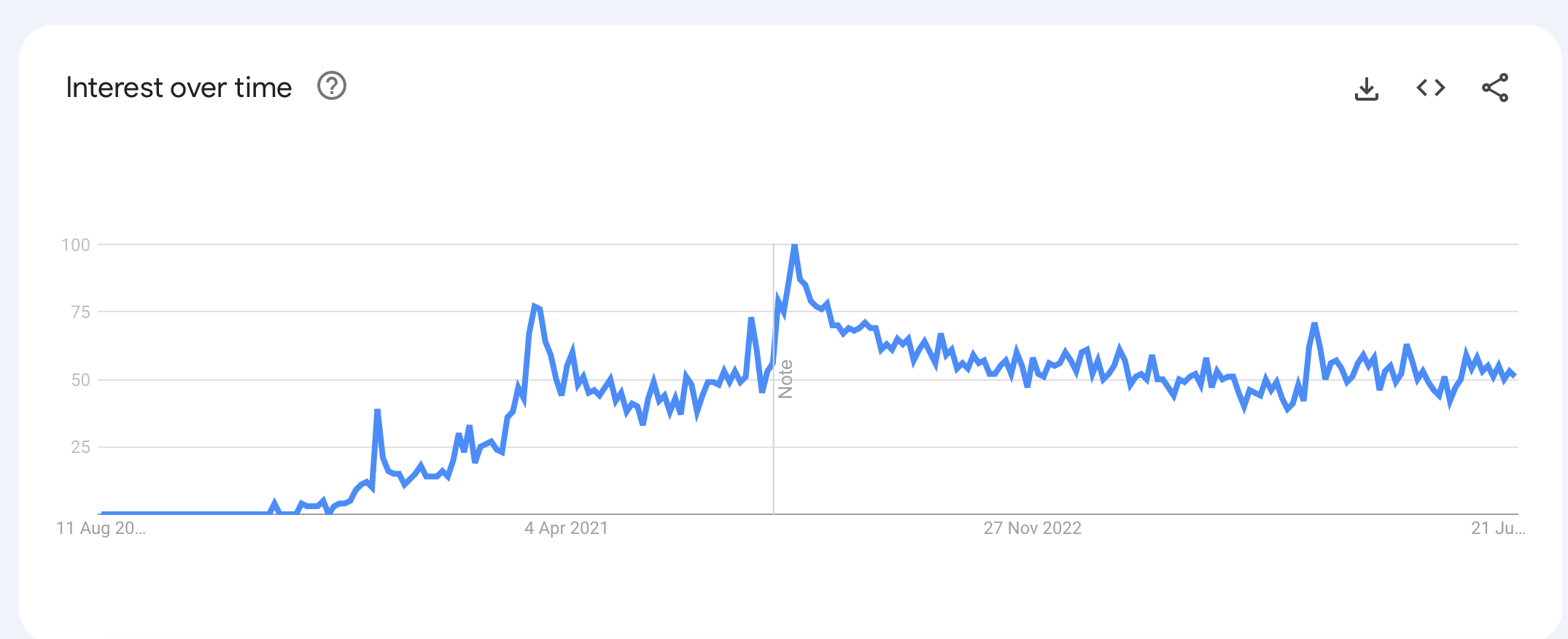
Nowhere is the affirmationist Zeitgeist more clearly expressed than in hyperpop, a genre that owes its meteoric rise to Covid, even though its origins as an underground project date back to the 2010s. A hundred years of popular music have led to the development of ever more effective ways to hack the human dopamine system. Popular music, therefore, became the equivalent of junk food: streamlined, formulaic, and filled with addictive substances. Taking the most radical techniques of pop and turning them up to eleven, Hyperpop is catchy, shiny, and fast. It sounds like bubblegum, presenting us with an artificial, synthetic, and supremely addictive experience that is simply fun.
Hipsterism was a quest for authenticity. While it viewed the commercialized mainstream as fake and therefore disgusting, it was at the same time predicated on the belief that good things do exist. Hipsters viewed themselves as connoisseurs of culture, screening the depths of the internet in an incessant search for the artsy, the authentic, and the meaningful.
Hyperpop, however, denies the existence of the authentic. As there is no outside to Capital and no Other of the cultural industry, everything is always already commodified. The Hipster was foolish enough to believe otherwise, falling victim to what Danny L. Harle calls a "hyperreal authenticity": things are carefully produced, packaged and marketed to feel authentic. At its core still pop like any other, just tailored to the sentiments of a stupid, snobbish audience.
The answer to this conundrum is being unapologetically fake. Hyperpop is no less aware of the mechanisms that pop employs than the Hipster and the cultural critic, but this awareness does not lead to rejection. On the contrary. Self-referentiality and self-knowledge immunize the genre against all forms of critique – and critique is dead anyways. Hyperpop replaces contrarianism with affirmation, snobism with poptimism, the search for the authentic with the enjoyment of the synthetic. Hyperpop is neither ironic nor cynical, it wholeheartedly celebrates the commercialized world we live in. Hyperpop is ultraliberal presentism, digital affirmation, and cute accelerationism.
According to hauntologist-in-chief Mark Fisher, culture is so “repetitive, parasitic and conformist”, that we get “the feeling that there is nothing new”. Capitalist Realism is Fredric Jameson’s Postmodernism, society in a state “dominated by pastiche and revivalism”. The same superhero movies, the same sound, forever and ever. Bad music, shitty art, boring philosophy. Overcoming this catatonic state, the hauntologists believed, necessitates a break with the present. But hyperpop contends that there is no catatonia, that progress is possible; not in a utopian future that has to be salvaged from the past, but in the actual present.
In a certain sense, Brat retroactively redeems hyperpop as such. As a symptom of the replacement of one paradigm (hauntology) by another (affirmation), it proves the existence and therefore the possibility of a significant vibe shift, and thereby its own premise, the vitality of the present. With the same sleight of hand, it refutes Vaporwave, which situates productive potential only in the past and the future.
Return of the Repressed
The current age of affirmation is not completely unprecedented. After each failed upsurge of revolutionary energy, we have witnessed a period of depolitization. The disappointing outcome of the French Revolution created the Thermidor, and then the age of Biedermeier, a retreat into the private sphere. After the lost world revolution of 1917 to 1919, the “Roaring Twenties” offered pure hedonism. The failure of the 1968 movement gave birth to New Age, punk (“No Future”) and then post-punk, all of which substituted real political action for a kind of inner emigration.
In such times, it is unwise to pretend that we can just go with our praxis, with the same manner of organizing. Being a materialist requires the courage to face the truth of our predicament. “True heroism”, Slavoj Žižek argues, “resides not in blindly clinging to the early revolutionary enthusiasm, but in recognizing ‘the rose in the cross of the present’ … abandoning the position of the Beautiful Soul and fully accepting the present as the only possible domain of actual freedom.” Anything else would condemn us to a state of mortal disorientation, thereby blocking the path to an understanding of the world as it actually exists:
One should recall here Hölderlin’s Hyperion, a weird but crucial short essay by Gyorgy Lukács from 1935 in which Lukács praises Hegel’s endorsement of the Napoleonic Thermidor against Hölderlin’s intransigent fidelity to the heroic revolutionary utopia. Hegel comes to terms with the post-thermidorian epoch and the close of the revolutionary period of bourgeois development, and he builds up his philosophy precisely on an understanding of this new turning point in world history. Hödlerlin makes no compromise with the post-thermidorian reality; he remains faithful to the old revolutionary ideal of renovating polis democracy and is broken by a reality which has no place for his ideals, not even on the level of poetry and thought.
At the same time, the world as it actually exists can not be reduced to the discourse. The displacement of reality by the hyperreal is nothing but an ideological mirage. Affirmation will not save us from artificial intelligence, war, and ecological catastrophe. The basic contradictions of bourgeois society are still there, unresolved. Disco will not bring us closer to Elysium. It is revolution or death, the fulfilment of modernism or the end of humanity. Always has been.
What is to be done in this age? Theodor W. Adorno called his writings Flaschenpost, messages in a bottle. The task of the revolutionary is to prepare for the next epoch. We should remember that the age of affirmation did not come about because of an inherent flaw in hauntology. History is full of cruel jokes, and Covid is one of them, a contingency that no one could have forseen. Maybe it has saved us; saved us from the equally contingent mistakes of the 2010s left, above all its authoritarianism. In any case, the death of hauntology cannot be viewed as a verdict on its inner truth.
Sooner or later, history will give us another chance. Until then, we should read and write and debate our friends. And of course, dance through the night.